[Article] - Health monitoring of NiTi endodontic instruments using acoustic Emission: Spectral indicators for predictive damage detection
Photo
Abstract
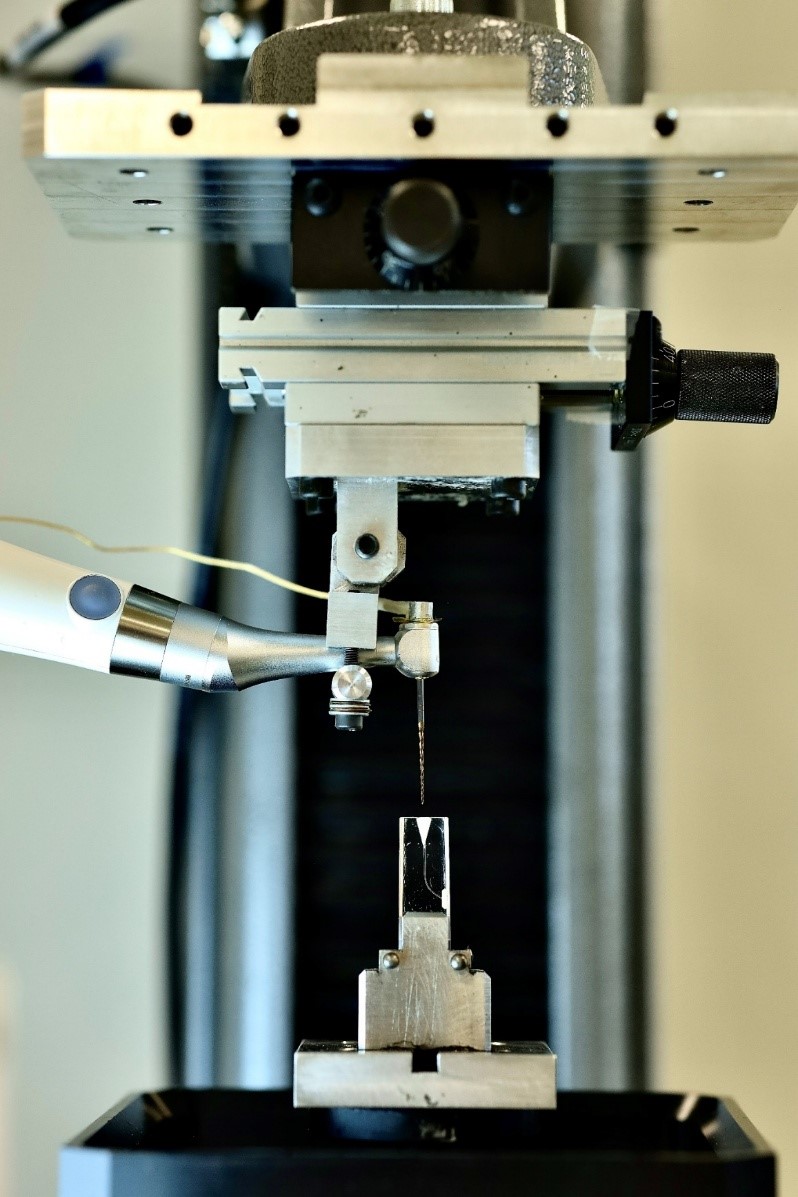
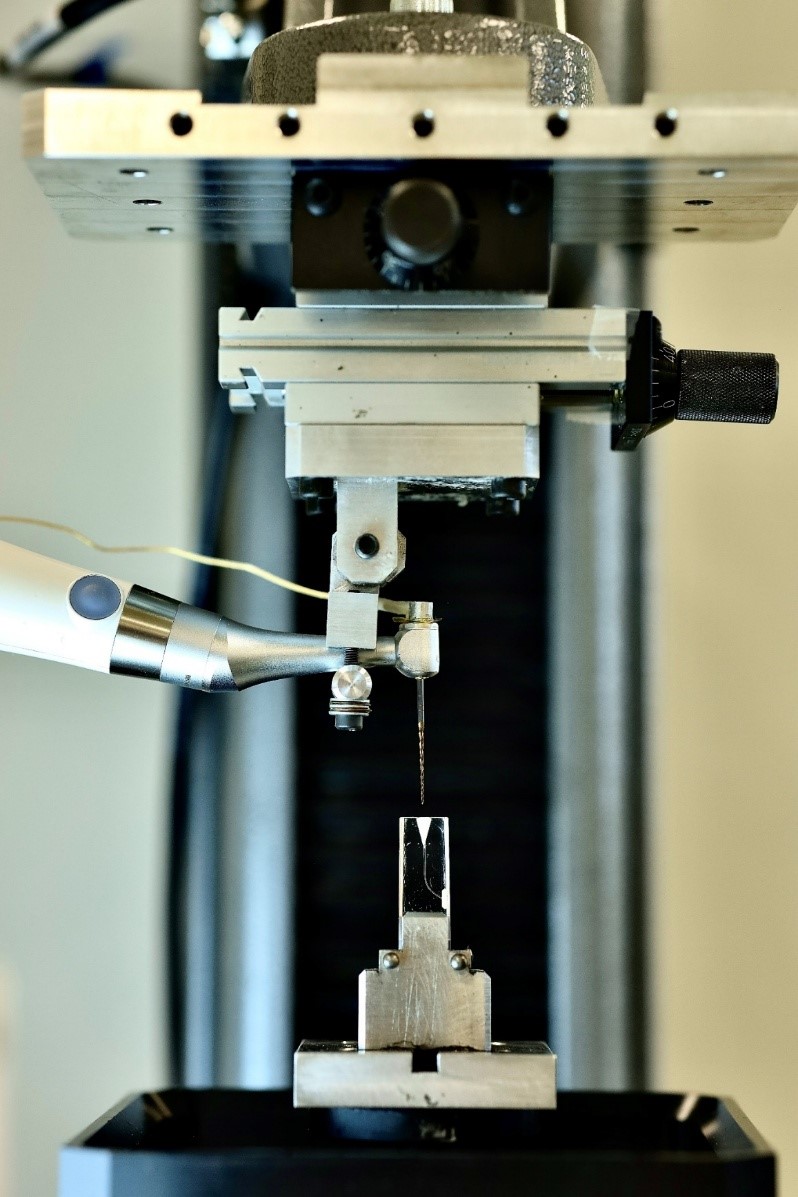
Nickel-titanium (NiTi) endodontic instruments, also known as files, are widely used in root canal treatments due to their superelastic and shape memory properties. However, their unpredictable failure remains a major concern in clinical practice. In this study, acoustic emission (AE) monitoring is used to assess tool wear and detect early-stage damage in real-time. By segmenting the AE frequency spectrum into four bands corresponding to the sensor’s sensitivity range (195–742 kHz), high- and low-frequency acoustic energy indicators are defined. The ratio of high-to low-frequency acoustic energy—termed AEDI—is proposed as a damage indicator associated with the initiation and propagation of microcracks. Its evolution during sequential blocks of use is analyzed for about ten instruments. In parallel, the number of acoustic events and the maximum penetration force are recorded and analyzed. The analysis reveals mechanical and acoustic instabilities that can inform the development of early damage detection criteria. Two predictive approaches are proposed: one based on the cumulative high-frequency AE energy (an energy threshold criterion), and another based on the progressive amplitude and recurrence of mechanical and acoustic instabilities (an incremental criterion). The cumulative AEDI-based criterion considers the total energy of high-frequency signals exceeding a defined threshold, and generally predicts damage later, after an average of 5.81 blocks (SD = 0.92). In contrast, the incremental criterion, which is based on changes in maximum force drop and AEDI increases observed at the end of each block, provides earlier warnings, with an average of 3.75 blocks (SD = 1.16). These findings lay the groundwork for the development of a real-time predictive maintenance method for NiTi endodontic files, aimed at enhancing procedural safety and instrument reliability.
Autors
Jeanne Davril, Romain Hocquel, Marin Vincent, Andrea Cappella, Rémy Balthazard, Éric Mortier, Adrien Baldit, Rachid Rahouadj
References
J Mech Behav Biomed Mater. 2026 Jan;173:107246. doi: 10.1016/j.jmbbm.2025.107246. Epub 2025 Oct 26. PMID: 41161192.
DOI